
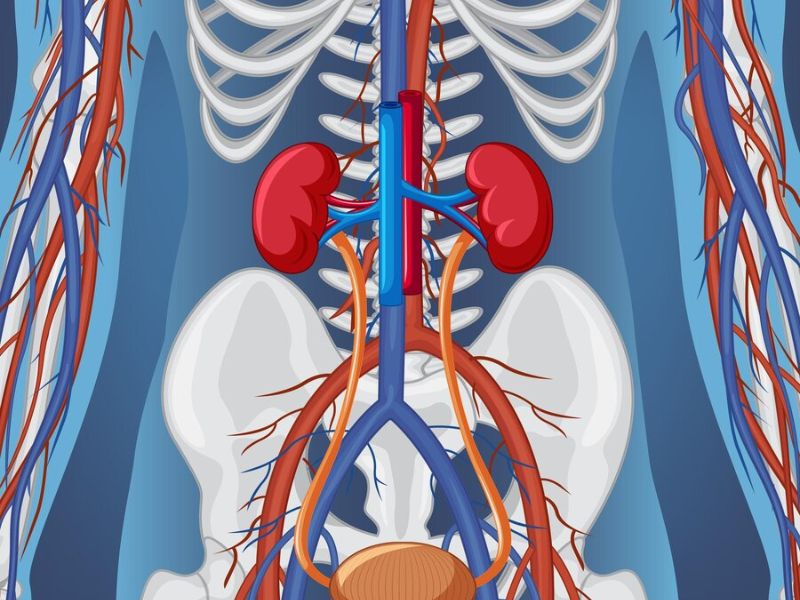
Definition of Abdominal Aortic Aneurysm
Abdominal aortic aneurysm (AAA) is defined as a focal dilation of the aorta involving all layers that exceeds its normal diameter by more than 50%. The abdominal aorta located below the renal arteries (infrarenal) is the most common site of aortic aneurysm. In the infrarenal aorta, a maximum diameter ≥3.0 cm is aneurysmal in the majority of patients.
Medical History and Risk Factors
The patient's medical history helps identify risk factors for the development of an AAA and risk factors associated with rupture.
It is important to ask the patient and any potential caregivers if a diagnosis of AAA has been established in the past or if an AAA repair has already been performed. The medical history can also help determine if clinical manifestations are likely related to a potential AAA rather than another pathology.
Symptoms potentially related to AAA (e.g., pain) can mimic those of many other diseases; however, in patients known to have an AAA or subsequently shown to have an AAA, symptoms are presumed to be due to the aneurysm until proven otherwise unequivocally.
Clinical Features
- Asymptomatic: Most patients with AAA do not present any symptoms. Asymptomatic AAA may be discovered during screening in patients with risk factors for AAA, during a routine physical examination, or during imaging tests aimed at evaluating an unrelated condition.
- Symptomatic: Symptoms of an AAA may appear if the aneurysm grows rapidly, becomes large enough to compress surrounding structures, is inflammatory or infectious, or has ruptured.
Patients with symptomatic AAA most often present with abdominal, back, or ankle pain, which may or may not be associated with AAA rupture.
The classic triad of acute abdominal pain, abdominal distension, and hemodynamic instability is present in about 50% of patients with AAA rupture. AAA may also present other clinical manifestations such as limb ischemia (acute or chronic) or other systemic manifestations (fever, malaise).
Diagnosis
Although an abdominal aortic aneurysm (AAA) may be suspected based on risk factors and clinical features, including abdominal palpation or other physical examination findings, a definitive diagnosis requires abdominal imaging studies showing a focal dilation of the aorta meeting the criteria for an aneurysm (>1.5 times the normal diameter). Abdominal palpation alone cannot be used to diagnose or exclude an AAA and is affected by the patient's abdominal circumference.
Abdominal Imaging
Abdominal ultrasound and abdominal computed tomography are both highly sensitive and specific for diagnosing an abdominal aortic aneurysm (AAA), but they are recommended in different clinical circumstances (algorithm 1) depending on the presence of symptoms and the patient's hemodynamic status.
- Asymptomatic – For most asymptomatic patients, we recommend abdominal ultrasound as the initial diagnostic method. Ultrasound is non-invasive and cost-effective for diagnosing an abdominal aortic aneurysm (AAA) in asymptomatic patients.
- Symptomatic
- Hemodynamically stable – For most hemodynamically stable symptomatic patients, we recommend abdominal computed tomography (CT) as the initial diagnostic method.
Abdominal CT provides additional anatomical details that identify the ruptured aneurysm, infected aneurysm, inflammatory aneurysm, and other important features for the subsequent management of symptomatic AAAs.
Abdominal CT can also identify other pathologies that may be causing the symptoms. - Hemodynamically unstable – For hemodynamically unstable symptomatic patients suspected of having a ruptured AAA, when a diagnosis of AAA is NOT previously known, we suggest a targeted ultrasound examination (in the care room, operating room) to confirm the existence of an aneurysm before exploration, provided it is immediately available.
Patients with a known AAA and classic signs and symptoms of rupture are generally directed towards repair without preoperative imaging.
- Hemodynamically stable – For most hemodynamically stable symptomatic patients, we recommend abdominal computed tomography (CT) as the initial diagnostic method.
Source: UpToDate