
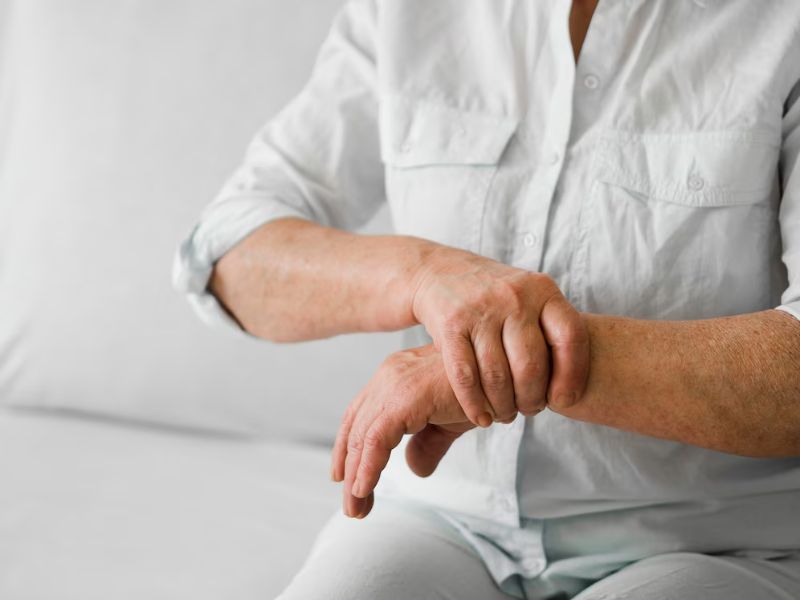
Definition of Osteoarthritis
Osteoarthritis is a chronic joint condition characterized by the progressive degradation of joint cartilage. This process leads to cartilage wear, which loses its elasticity and becomes thinner, limiting the joint's ability to absorb shocks and movements. This deterioration is often accompanied by changes in adjacent structures, such as subchondral bone and surrounding tissues. These changes generally cause pain, joint stiffness, and can lead to a progressive loss of function in the affected joint.
Epidemiology
In Switzerland, about 15% of adults suffer from osteoarthritis, with a marked increase after the age of 65. Global statistics show that approximately 10% of men and 18% of women over 60 are affected, highlighting a particularly significant impact on women after menopause. This condition mainly affects the knee and hip, leading to chronic pain and mobility limitations, which affect quality of life. Globally, osteoarthritis is one of the leading causes of disability, with a continuous increase linked to population aging.
Causes of Osteoarthritis
The causes of osteoarthritis include the natural wear and tear of joints with age, resulting from repeated movements and physical stress. Excess weight puts increased pressure on weight-bearing joints, such as the knees and hips, promoting cartilage wear. Joint injuries, often related to sports or accidents, also contribute to its occurrence. Congenital anomalies, malformations, or misalignments of the joints also play a role in its development.
Risk Factors
The risk factors for osteoarthritis include the following:
- Advanced age: cartilage naturally wears down over time, increasing the risk of osteoarthritis with age.
- Female gender: women, especially after menopause, are more likely to develop osteoarthritis.
- Excess weight: additional weight puts increased pressure on the joints, especially those of the knees and hips.
- Occupations or activities that intensely stress the joints: repetitive movements and heavy lifting accelerate joint wear.
- History of joint injuries: previous injuries, often sports-related or accidental, weaken the joints and promote osteoarthritis.
- Anatomical abnormalities: misalignments or malformations of the joints increase stress on the cartilage.
- Genetic predispositions: osteoarthritis may be more common in people with a family history of the disease.
Symptoms of Osteoarthritis
The symptoms of osteoarthritis include the following:
- Joint pain: pain that intensifies with joint use and decreases at rest.
- Stiffness: especially in the morning or after a period of inactivity, it generally decreases after a few minutes of movement.
- Reduced mobility: difficulty performing certain movements or fully moving the joint.
- Joint cracking: sensation or sound of cracking during joint movements.
- Swelling: sometimes, the joint may show slight swelling or local inflammation.
- Deformation: over time, changes in the shape of the joint may appear, particularly in the fingers.
These symptoms vary in intensity and may gradually evolve.
Radiological Imaging
Radiological imaging allows for the diagnosis and monitoring of osteoarthritis by visualizing joint changes. The main radiological examinations are:
- Standard X-ray: the first technique used, it shows joint space narrowing, the presence of osteophytes (bone spurs), and bone remodeling. It is essential for confirming the diagnosis.
- MRI (Magnetic Resonance Imaging): it visualizes soft tissues and cartilage, allowing for a more precise evaluation of the internal structures of the joint. MRI detects early cartilage lesions and changes in adjacent tissues.
- Ultrasound: it allows visualization of synovial inflammation, joint fluid, and certain tendon and ligament abnormalities. This technique is particularly useful for monitoring joint inflammations.
- CT Scan: used in certain cases to visualize bone details and evaluate structures difficult to see on standard X-rays, especially in complex joints.
Each technique provides complementary information, helping to assess the severity of osteoarthritis and plan management.
Prevention of Osteoarthritis
The prevention of osteoarthritis is based on several strategies aimed at reducing risks and preserving joint health:
- Maintain a healthy weight: reduces pressure on weight-bearing joints, particularly the knees and hips.
- Engage in regular exercise: strengthens the muscles around the joints and improves their stability, thus reducing wear.
- Avoid repetitive movements: limiting activities that intensely stress the same joints prevents premature wear.
- Adopt good posture: helps distribute loads evenly, reducing stress on certain joints.
- Use joint protection: during physical activities or high-risk sports, knee pads, elbow pads, and other protections can prevent injuries.
- Have a balanced diet: a diet rich in antioxidants and nutrients (calcium, vitamin D) supports bone and joint health.
- Consult early in case of joint pain: early diagnosis allows intervention before damage becomes severe.
These measures help delay the onset of symptoms and improve quality of life.
Conclusion
Osteoarthritis, a common and progressive joint disease, significantly impacts patients' quality of life. An approach combining prevention, early diagnosis, and adapted therapeutic strategies helps limit its progression and relieve symptoms. Radiology plays a central role in evaluation and monitoring, providing valuable information for adjusting treatments. Adopting healthy habits and consulting at the onset of symptoms remain essential for preserving long-term joint health.
Finally, if you have symptoms or concerns, consulting a general practitioner allows for an accurate diagnosis and tailored advice.
Source: UpToDate