
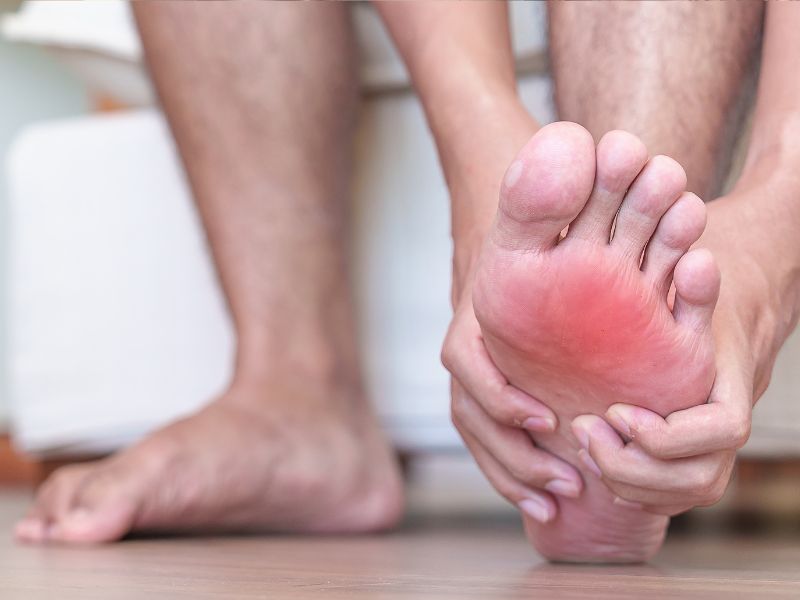
Definition of Morton's Neuroma
Forefoot pain (Metatarsalgia and other associated conditions) :
The forefoot is a common area of pain in adults, particularly in the elderly. This region of the foot is often affected by various problems such as bunions (hallux valgus), metatarsalgia, hammer toes, and quintus varus (small bunions). Additionally, corns and calluses are common, forming on the toes or the plantar surface of the feet.
Symptoms of Morton's Neuroma
Symptoms related to forefoot pain include:
- Toe deviation : Valgus of the big toe, varus of the fifth toe, rotation of the little toe.
- Toe spacing : Abnormal spacing between the toes.
- Hammer toes and contractures : Excessive flexion of the interphalangeal joints.
- Calluses : Presence of corns or calluses on the back of the interphalangeal joints or on the plantar metatarsophalangeal joints.
Causes
The causes of forefoot pain can be divided into two main categories:
Traumatic causes :
- Fractures : Isolated traumas can affect the metatarsals, the big toe, the sesamoid bones, the nail beds, or the minor toes.
- Sprains : Acute sprain of the first metatarsophalangeal joint, often called “turf toe,” is an example of traumatic injury.
Non-traumatic causes :
- Structural problems : Hallux valgus, hammer toes, quintus varus.
- Calluses and corns : Resulting from excessive pressure or poor weight distribution.
- Inappropriate footwear : Causes or exacerbates existing conditions.
Treatment
Management of traumatic causes :
- Rest and support : Sprains, such as big toe sprain, are often treated conservatively with rest and bandaging.
- Surgical management : In some cases, surgical intervention may be necessary depending on the severity and location of the injury.
Management of non-traumatic causes :
- Shoe modifications : Use of pads, insoles, or orthotics to relieve pressure on the forefoot.
- Activity modifications : Reduction or adaptation of physical activities to avoid worsening symptoms.
- Injections : Glucocorticoids or analgesics to reduce inflammation and pain.
- Surgical intervention : If conservative treatments fail, a surgical consultation may be considered.
Use of Medical Imaging
Medical imaging is essential for evaluating traumatic causes of forefoot pain, such as fractures or complex sprains. The following techniques are commonly used:
- Ultrasound: Can be used to evaluate soft tissues, such as ligaments and tendons, particularly in cases of sprain.
- MRI (Magnetic Resonance Imaging) : Provides detailed images of bones and soft tissues, useful for diagnosing complex conditions and injuries not visible on standard X-rays.
Medical imaging allows for confirmation of the diagnosis and planning of the most appropriate treatment based on the nature and severity of the pathology.
Source: UpToDate